

The Catalyx Alliance: Accelerating Hazard Reduction
The Challenge
One of the post-processing facilities within the WAGR (Windscale Advanced Gas-cooled Reactor) Complex, on the Sellafield site, contains legacy, degrading caves which store many PIE (Post Irradiation Examination) Cans containing activated steelwork and neutron sources. The PIE Cans, along with the degrading caves, present a significant hazard, and their removal is a critical enabler for both the decommissioning of the WAGR complex, and the achievement of the WAGR Grand Challenge – Remediation 2045’s initiative for improving the way in which decommissioning is delivered.
Optioneering was done previously but excessive complexity and analysis paralysis prevented progress. We were engaged to unpick the complexity, set the direction and create an actionable way forward; accelerating the delivery of solutions development and hazard reduction.
The Catalyx Approach
The Catalyx Alliance has brought together complimentary engineering capabilities to play a fundamental role in accelerating the delivery of PIE Can removal. Across the Alliance, we have deployed our multidisciplinary engineering capabilities to deliver the following in support of the PIE Can removal:
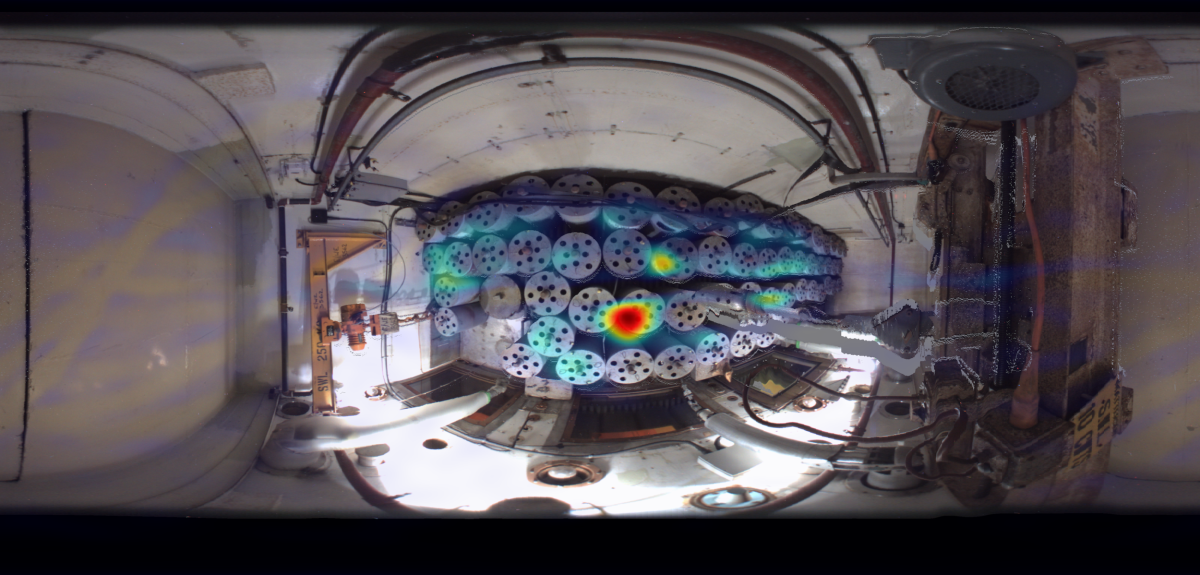
- Working with Createc, we deployed radiological monitoring to determine radiation levels within the caves and develop a map to inform the hazard reduction strategy.
- We deployed our integrated methodology for tackling complex technical problems; rationalising complexity and identifying a preferred way forward.
- We developed and assessed retrieval options, including creating a functional trial environment to refine the preferred design and support operator engagement and familiarisation.
- We conducted civil and structural engineering substantiation to underpin the implementation of the developed solution.
- We accelerated decommissioning via enhanced collaboration between supply chain partners and the client.
React – Engineering Definition and Optioneering Expertise
React Engineering (React) provides the Catalyx Alliance with essential Front End Engineering Design (FEED) and full life cycle delivery capabilities. This encompasses problem definition and framing, alignment to wider strategic drivers, and optioneering to identify well-defined, actionable ways forward. Through systematic assessment of options, scheme selection and feasibility studies, React supports the accelerated development of effective, well-bounded and high value for money solutions that accelerate progress whilst accounting for technical constraints. These capabilities enable effective decision making through detailed analysis, focusing on key enabling factors like hazard identification and waste routing options, while also addressing the wider challenges and constraints posed by the facility. Several workshops were held to engage key stakeholders, define requirements and establish project aims and success criteria, ensuring proposed solutions aligned with operational needs and expectations.
Radiological characterisation deployments, supported by Createc’s N-Visage® radiation monitoring equipment, enabled development of radiological data and assessment of the risk levels within the caves. The findings established an important evidence base for subsequent operations, helping to inform radiological safety requirements and future access arrangements.
Retrieval Methodology Selection – Preferred Solution
Once bounding parameters were established, optioneering for waste routing and handling strategies could begin. This included option identification, cost-benefit analyses, feasibility studies, project coordination, and more. Where previous options were deemed infeasible or overly complex within the constraints of the caves, React played a pivotal role in unpicking the challenge, engaging stakeholders and bringing them on the journey to ensure they were bought into the solutions being developed.
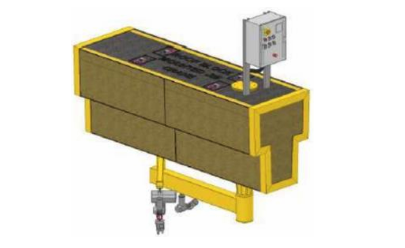
The option identification and evaluation framework created and deployed by React enabled new methodologies and innovative solutions to be identified with confidence. Research and analysis were conducted with CORE Nuclear Solutions (CORE), utilising combined knowledge to determine feasibility of internal cranes structures. The preferred solution was a Roof Block Mounted Jib Crane (RBMJC).
CORE – Mechanical, Electrical and Robotic Expertise
CORE provides the Alliance’s advanced robotic knowledge, supplying specialist remote handling solutions from across their four facilities in Cumbria. CORE’s task was to support option down-selection and subsequent development. CORE supported the identification of the proven, low-risk RBMJC as the preferred option, altered for use in a challenging and radiologically contaminated environment.
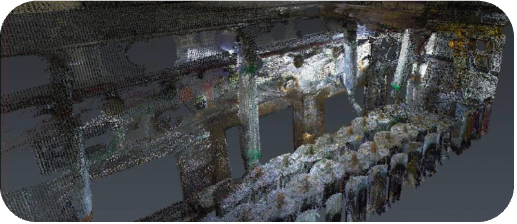
Given the 50+ year old age of WAGR and limitations in historical data, CORE initially built a 3D model of the complex using laser scans, photography and survey data. Building on the initial feasibility study, the model established key design parameters and provided invaluable information for the location of radiological hotspots; broadening the operational retrieval scope and improving understanding of the physical environment, thus reducing the levels of uncertainty.
To validate this approach, CORE built and tested a scale mock-up of both the Gantry and the Examination Hall, including mock PIE Cans. This created a like-for-like test environment to develop the system and enable the operators to train and familiarise themselves with the remote retrieval solution while being removed from the hazard. With the operators demonstrating functionality of the solution, the concept transitioned from an idea to a feasible and practical design.This rapid solution identification and development approach illustrates the crux of Catalyx – safeguarding outcomes while accelerating change.
Westlakes Engineering – Civil and Structural Engineering Expertise
Westlakes Engineering (Westlakes) compliments the Alliance with specialist Civil, Structural and Architectural (CS&A) engineering design and assessment capabilities, supported by expertise in 3D modelling, building information management, geographic information system and digital surveying.
Due to the age and degrading nature of the caves, a detailed analysis of the loading on the structure by the RBMJC was required. Westlakes provided material and structural analysis to assess this impact. This involved reviewing historical drawings, records and information to establish the original loading conditions applied to the structure, and then assessing the impact of the crane’s additional loading to the structure. Both local and global structural loading were considered, enabling Westlakes to identify suitable locations for applying loads and provide recommendations to minimise the risk of overloading. This analysis provided essential structural substantiation to support the development of a safe, feasible and deliverable retrieval solution, a critical enabler for the accelerated decommissioning of WAGR.
Across the PIE Can retrieval scope, our Alliance achieved the following outcomes for the client:
- Approved solution for PIE Can retrievals – unlocking and accelerating an actionable way forward for the delivery of significant risk reduction.
- Produced radiological data surveys to greater understand the problem and enable definition of a way forward.
- Manufactured a like-for-like test and training rig to support design development and operator familiarisation.
- Provided engineering substantiation to underpin implementation of the solution.
